Unveiling the Overlooked: The Depth of Awareness
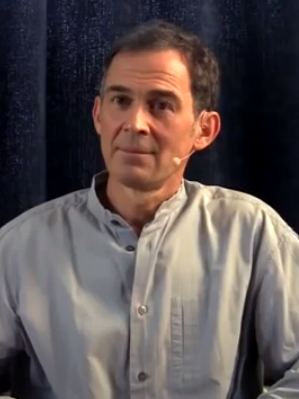
Rupert Spira's assertion that "Awareness is what we are most familiar with — and most often overlook" invites us to reflect on the paradox of our existence. While awareness is the very essence of our being, it is often relegated to the background of our consciousness, overshadowed by the incessant chatter of thoughts and distractions. This oversight is not merely a philosophical curiosity; it has profound implications for how we engage with our lives and the world around us. Recognizing and embracing our inherent awareness can lead to a transformative understanding of ourselves and our relationships.
In a world that constantly demands our attention, the notion of awareness can seem abstract or even mundane. Yet, it is in this very familiarity that we find the key to deeper insight. By acknowledging our awareness, we can begin to peel back the layers of our conditioned responses and habitual patterns. This journey into the heart of awareness is not just an intellectual exercise; it is a pathway to experiencing life more fully, with clarity and presence. The stakes are high, as this exploration can lead to a profound shift in how we perceive ourselves and our connection to the universe.
The image / the metaphor
At first glance, the quote presents a simple dichotomy: awareness is both familiar and overlooked. The imagery conjured here is one of a vast, open sky—our awareness—often obscured by the clouds of distraction and thought. The verbs "familiar" and "overlook" evoke a sense of intimacy with our awareness, suggesting that it is something we have always known yet fail to recognize in our daily lives. This juxtaposition invites us to consider how we might be living in a state of forgetfulness, where the most essential aspect of our being is relegated to the periphery.
In the speaker's tradition
Rupert Spira's teachings are deeply rooted in the non-dual tradition, which emphasizes the interconnectedness of all existence and the fundamental nature of consciousness. Concepts such as *sunyata* (emptiness) and *fana* (annihilation of the self) resonate with the idea that our true nature is awareness itself, free from the confines of individual identity. In this context, the act of overlooking our awareness can be seen as a form of ignorance, a veil that obscures the realization of our inherent unity with all that is. The journey toward recognizing this awareness is akin to the practice of *bhakti*, or devotion, where one seeks to dissolve the barriers between the self and the divine.
In the *Upanishads*, a foundational text in the non-dual tradition, we find the assertion that "You are that," pointing to the essential nature of awareness as the ultimate reality. This echoes Spira's sentiment, suggesting that our familiarity with awareness is not merely a personal experience but a universal truth waiting to be acknowledged. The teachings of Advaita Vedanta further illuminate this path, inviting us to explore the depths of our consciousness and recognize that the essence of who we are is not separate from the awareness that permeates all existence.
Living the teaching
Consider a modern scenario where this teaching might resonate: during a busy day at work, one might find themselves overwhelmed by tasks and responsibilities, losing sight of the underlying awareness that supports their actions. In such moments, the practice of pausing to breathe and reconnect with one's awareness can be transformative. By taking a few moments to step back and observe the flow of thoughts and emotions without attachment, one can cultivate a sense of clarity and presence that enhances productivity and well-being. This simple act of returning to awareness can shift the entire experience of the day, allowing for a more grounded and intentional approach to challenges.
In the realm of relationships, the teaching of awareness can also play a crucial role. Imagine a conflict arising between partners, where emotions run high and communication falters. By invoking awareness, each person can take a moment to recognize their feelings without becoming entangled in them. This practice of mindful awareness allows for a deeper understanding of one another's perspectives, fostering empathy and connection. In this way, the teaching becomes a bridge, transforming potential discord into an opportunity for growth and intimacy.
A reflection
As we contemplate Spira's insight, we are invited to ask ourselves: How often do I overlook the awareness that is the foundation of my being? This question serves as a gentle nudge to explore the depths of our consciousness and recognize the richness of our experience. By engaging with this inquiry, we can begin to cultivate a more profound appreciation for the awareness that is always present, guiding us toward a more authentic and fulfilling existence.




Join the BrightStar Community
Stay connected with daily inspiration, event announcements, and community wisdom