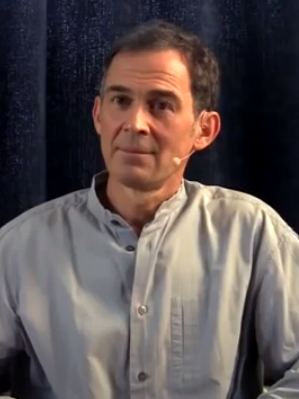
Embracing the Essence of Being
Rupert Spira's profound invitation to "Drop everything you have learned, and be" serves as a clarion call to relinquish the burdens of accumulated knowledge and identity. In a world saturated with information and expectations, this quote challenges us to return to our essence, to simply exist without the weight of preconceived notions. The stakes are high; in our relentless pursuit of understanding and validation, we often overlook the simple yet profound experience of being present in the moment. This teaching beckons us to explore the depths of our true nature, free from the constraints of thought and belief.
As we delve deeper into this invitation, we recognize that the act of "being" is not merely a passive state but an active engagement with the essence of existence itself. It calls us to strip away the layers of conditioning that have shaped our perceptions and to embrace a more authentic experience of life. This process of release is not an abandonment of knowledge but rather a transcendence of it, allowing us to reconnect with the pure awareness that underlies all experience. In this light, Spira's words become a pathway to liberation, urging us to discover the profound peace that resides in simply being.
The image / the metaphor
At first glance, the imagery in Spira's quote evokes a sense of shedding burdens, akin to a snake shedding its skin. The verbs "drop" and "be" are particularly striking; they suggest a deliberate action followed by a state of existence. To "drop" implies a release, an act of letting go of the mental constructs and learned behaviors that often define us. In contrast, "be" invites us into a state of presence, where we can experience life unfiltered by the narratives we have constructed over time. This juxtaposition between action and stillness encapsulates the essence of non-dual awareness.
Diving deeper into the metaphor, we can see that the act of dropping is not merely about relinquishing knowledge but also about surrendering the ego's grip on our identity. It is an invitation to transcend the duality of self and other, to recognize that our essence is not confined to what we have learned or how we have been conditioned. Instead, it encourages us to embrace the fullness of our being, which exists beyond the confines of thought and language. This metaphorical shedding allows us to reconnect with the innate wisdom that resides within, a wisdom that is often obscured by the noise of our learned experiences.
In the speaker's tradition
Rupert Spira's teachings are deeply rooted in the non-dual tradition, which emphasizes the interconnectedness of all existence and the illusion of separation. Concepts such as *sunyata* (emptiness) and *fana* (annihilation of the self) resonate with the essence of Spira's message. In this context, to "drop everything you have learned" aligns with the practice of *kenosis*, or self-emptying, which invites individuals to let go of their egoic attachments and preconceived notions. This process is not merely an intellectual exercise but a profound spiritual practice that leads to the realization of our true nature as pure awareness.
In the *Upanishads*, a foundational text in the non-dual tradition, we find echoes of this teaching in the concept of *tat tvam asi*, or "that thou art." This phrase encapsulates the essence of non-duality, suggesting that our true self is not separate from the universe but is, in fact, an integral part of it. By dropping our learned identities and embracing the truth of our being, we align ourselves with this ancient wisdom, allowing us to experience the unity that underlies all existence. Spira's invitation, therefore, is not just a personal call to awareness but a reminder of our shared spiritual heritage.
Living the teaching
Consider a modern scenario where the weight of expectations and learned behaviors becomes overwhelming—perhaps in a high-pressure work environment where success is measured by performance and accolades. In such a context, Spira's teaching invites us to pause and reflect on the nature of our striving. By consciously choosing to "drop everything" in that moment, we can shift our focus from external validation to internal presence. This act of letting go allows us to reconnect with our innate creativity and intuition, fostering a sense of clarity and peace amidst the chaos.
In the realm of relationships, this teaching can be particularly transformative. Imagine a moment of conflict with a loved one, where misunderstandings and past grievances cloud the interaction. By embodying the essence of Spira's words, we can choose to release our preconceived notions and judgments, allowing ourselves to be fully present with the other person. This practice of dropping our learned responses opens the door to deeper connection and understanding, fostering a space where love and compassion can flourish. In both personal and professional realms, the act of simply being can lead to profound shifts in our experience of life.
A reflection
As we contemplate the depth of Rupert Spira's invitation to "drop everything you have learned, and be," we are left with a poignant question to ponder: What would it feel like to release the weight of my learned identity and simply exist in the present moment? This inquiry invites us to explore the layers of our conditioning and to consider the possibility of experiencing life from a place of pure awareness. In this exploration, we may uncover the profound peace and joy that arise when we embrace the essence of our being, free from the constraints of thought and expectation.

Join the BrightStar Community
Stay connected with daily inspiration, event announcements, and community wisdom