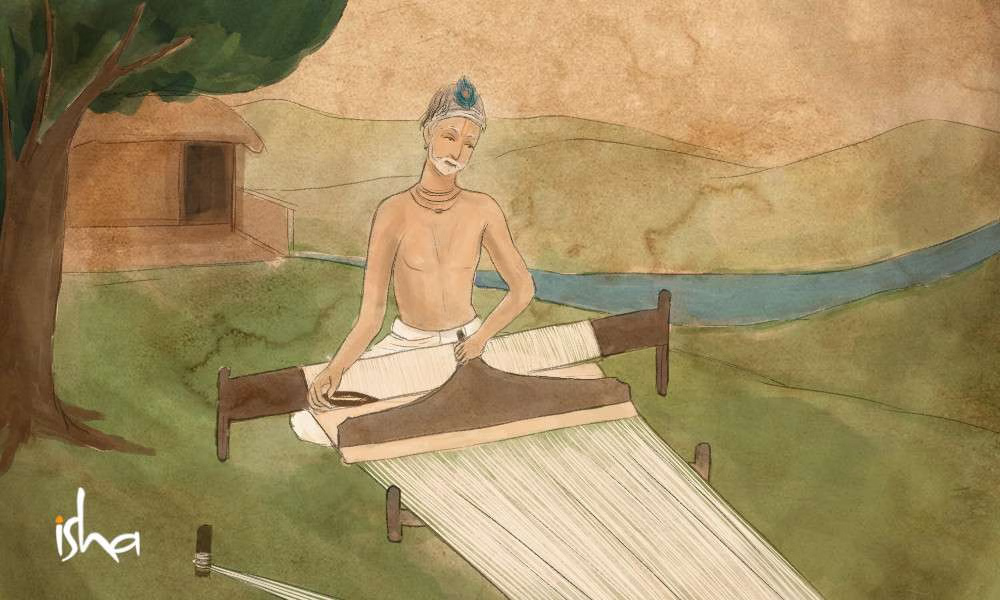
The Eternal Now: Union in the Present
In the profound words of Kabir, "If you have union now, you shall have it hereafter," we are invited to explore the essence of spiritual connection and the immediacy of our experiences. This quote speaks to the heart of our existence, suggesting that the depth of our union with the divine or with others is not a distant promise but a present reality. The stakes are high; understanding this teaching can transform our perception of time, relationships, and the sacredness of the now.
To grasp the weight of Kabir's message, we must consider the implications of union in our lives. It is not merely a future aspiration but a current state of being that we can cultivate. This perspective challenges us to engage fully with our present circumstances, recognizing that the divine is not found in some far-off realm but is accessible in the here and now. The urgency of this teaching compels us to reflect on how we live our daily lives and interact with the world around us.
The image / the metaphor
The imagery in Kabir's quote evokes a sense of immediacy and intimacy. The word "union" suggests a merging, a coming together of the self with the divine or with others, while "now" emphasizes the present moment as the only time in which this union can be experienced. The verbs chosen imply action and engagement; they call us to actively seek and recognize the connections that already exist in our lives. This felt sense of union is not passive; it requires our participation and awareness.
In the speaker's tradition
Kabir's teachings are rooted in the bhakti tradition, which emphasizes devotion and love for the divine as a means of attaining spiritual realization. Concepts such as dharma, or righteous living, and bhakti, or devotion, are central to understanding his message. The notion of kenosis, or self-emptying, resonates here, as it encourages us to let go of our ego and embrace the divine presence within us. This union is not just a personal experience; it is a collective awakening to the interconnectedness of all life.
In the context of bhakti literature, we can draw parallels to the works of other saints, such as Mirabai and Tulsidas, who also emphasized the importance of experiencing divine love in the present moment. For instance, in the Ramayana, Tulsidas speaks of the immediacy of devotion, suggesting that true connection with the divine can be felt in every breath and every action. This continuity of union, as articulated by Kabir, echoes throughout the bhakti tradition, reinforcing the idea that our spiritual journey is deeply intertwined with our present experiences.
Living the teaching
Consider a modern scenario where this teaching can be applied: a busy professional, overwhelmed by deadlines and responsibilities, finds it challenging to connect with their loved ones. In this context, Kabir's message serves as a gentle reminder that true union with family and friends is not contingent upon the absence of stress or the presence of leisure time. Instead, it invites the individual to cultivate moments of connection amidst the chaos, to engage fully in conversations, and to be present with those they love, recognizing that these moments are sacred.
Another application of this teaching can be found in the realm of relationships. Imagine a couple navigating a difficult phase in their partnership. Kabir's insight encourages them to seek union not in the resolution of their conflicts but in the act of being present with one another. By embracing vulnerability and honesty in their interactions, they can experience a deeper connection that transcends the challenges they face. This practice of presence can transform their relationship, allowing them to find solace and strength in their union, regardless of external circumstances.
A reflection
As we contemplate Kabir's profound words, we are left with a contemplative question: How can I cultivate a sense of union in my life right now? This inquiry invites us to reflect on our relationships, our spiritual practices, and our daily experiences. By embracing the present moment as a space for connection, we open ourselves to the possibility of experiencing the divine in every aspect of our lives, reminding us that union is not a distant goal but a present reality waiting to be realized.



Join the BrightStar Community
Stay connected with daily inspiration, event announcements, and community wisdom